
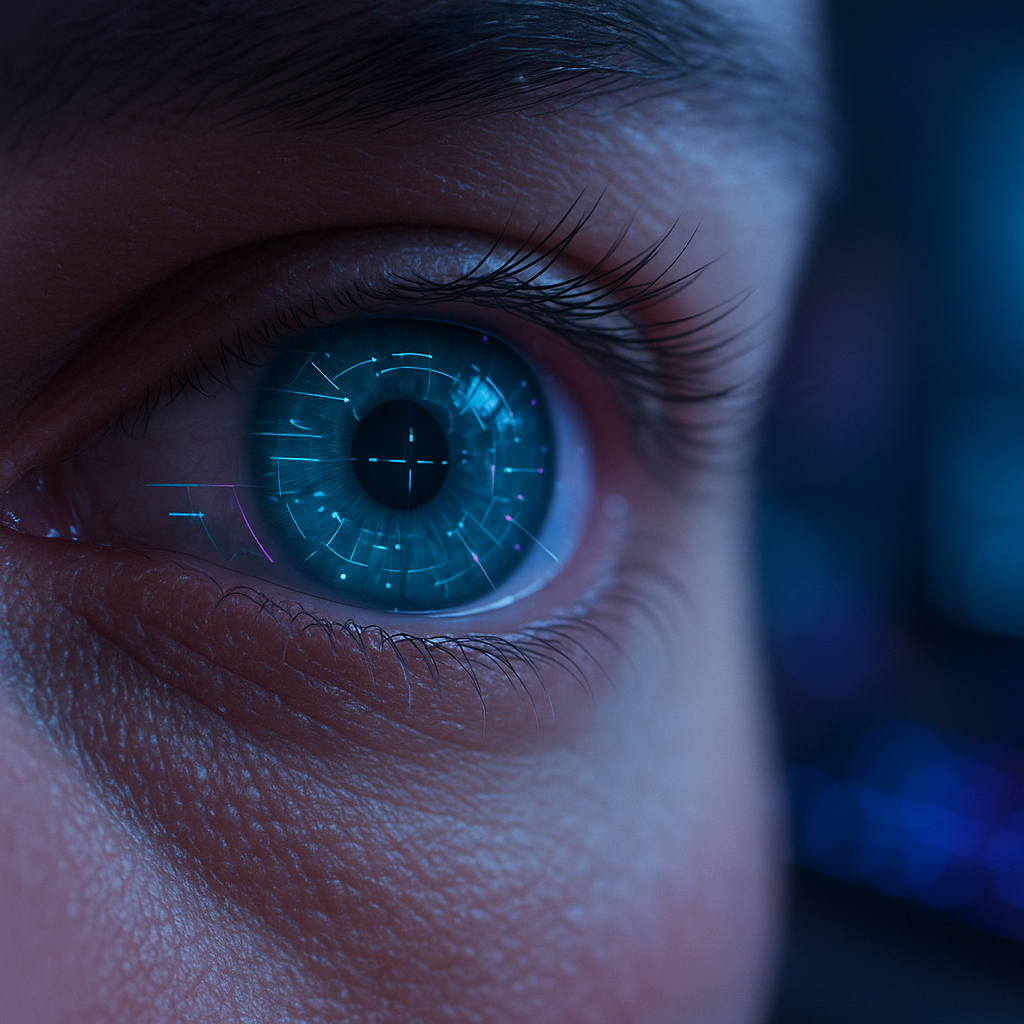
Not long ago, eye tracking in gaming felt like something pulled straight from a science fiction film — the kind of technology you’d expect to see in a high-budget blockbuster where the protagonist controls entire systems simply by looking at them. Today, it’s a feature you can buy off a shelf and clip onto your monitor for under £200. The journey from laboratory curiosity to mainstream gaming peripheral is a fascinating one, and it tells us a great deal about where interactive entertainment is heading.
This article explores how eye tracking technology evolved, what it actually does within games, and why an increasing number of developers and players are treating it not as a gimmick, but as a genuine leap forward in how humans interact with virtual worlds.
A Brief History of Eye Tracking Technology
The history of eye tracking stretches back further than most people realise. Early research into eye movement dates to the late 19th century, when scientists began studying how the human eye moves during reading. These initial experiments were cumbersome affairs — researchers would attach small levers or mirrors directly to the eye to record movement, which was as uncomfortable as it sounds.
By the mid-20th century, non-invasive techniques began to emerge, using reflected light to track pupil movement. These systems were primarily used in psychology and cognitive science research, helping academics understand attention, reading comprehension, and visual processing. The technology remained firmly within academic and medical settings for decades.
The shift towards practical, consumer-facing applications began in earnest during the 2000s, when companies started miniaturising the hardware and improving the accuracy of infrared-based systems. Swedish company Tobii, founded in 2001, became particularly influential in this space, eventually pivoting towards gaming peripherals after establishing itself in assistive technology markets. Their devices allowed people with physical disabilities to control computers entirely through eye movement — a genuinely life-changing application that also happened to lay the groundwork for everything that followed in gaming.
How Does Eye Tracking Work in Video Games?
At its core, eye tracking in gaming relies on near-infrared light projected from a device — typically mounted below a monitor — that illuminates the eyes and captures reflections. Cameras then record these reflections, and sophisticated algorithms calculate exactly where on the screen the player is looking, often with remarkable precision.
Modern consumer-grade devices like the Tobii Eye Tracker 5 can track gaze at up to 33 times per second, which is fast enough to feel genuinely responsive during gameplay. The system creates a continuous stream of data about where the player’s attention is focused, and game engines can use this data in a variety of ways.
Key In-Game Applications
- Extended View: The game camera shifts subtly in the direction you’re looking, giving a wider field of view without requiring manual input. This is particularly effective in flight simulators and racing games.
- Dynamic Depth of Field: Graphics engines blur elements in the peripheral vision while keeping the focal point sharp, mimicking how human vision actually works and creating a more cinematic, immersive experience.
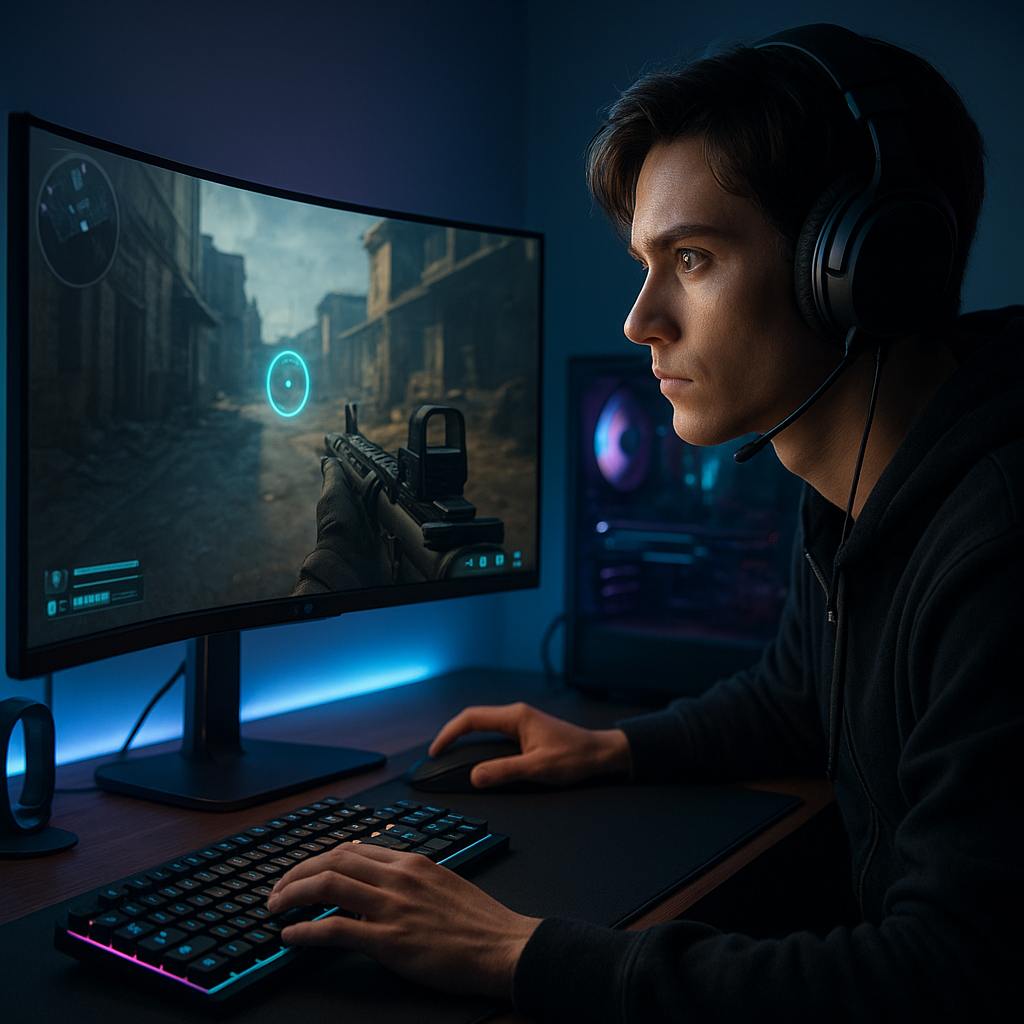
- Aim at Gaze: In shooters, players can use their eyes to direct rough aim and then fine-tune with a mouse or thumbstick — dramatically reducing the time required to acquire targets.
- Foveated Rendering: This is arguably the most technically significant application. By rendering the area the player is looking at in high detail while reducing graphical fidelity in the periphery, the system can significantly reduce GPU workload without the player noticing any visual degradation.
- Environmental Interaction: Some games allow players to highlight objects, interact with NPCs, or trigger in-world events simply by looking at them.
Games like Assassin’s Creed Odyssey, Dying Light 2, Far Cry 5, and Microsoft Flight Simulator have all incorporated eye tracking features to varying degrees, demonstrating that the technology is compatible with a wide range of genres.
The Tobii Ecosystem: From Tracker 4 to Tracker 5
When discussing eye tracking in gaming, it’s almost impossible to avoid mentioning Tobii, which has dominated the consumer market. Their product line tells the story of the technology’s maturation rather neatly.
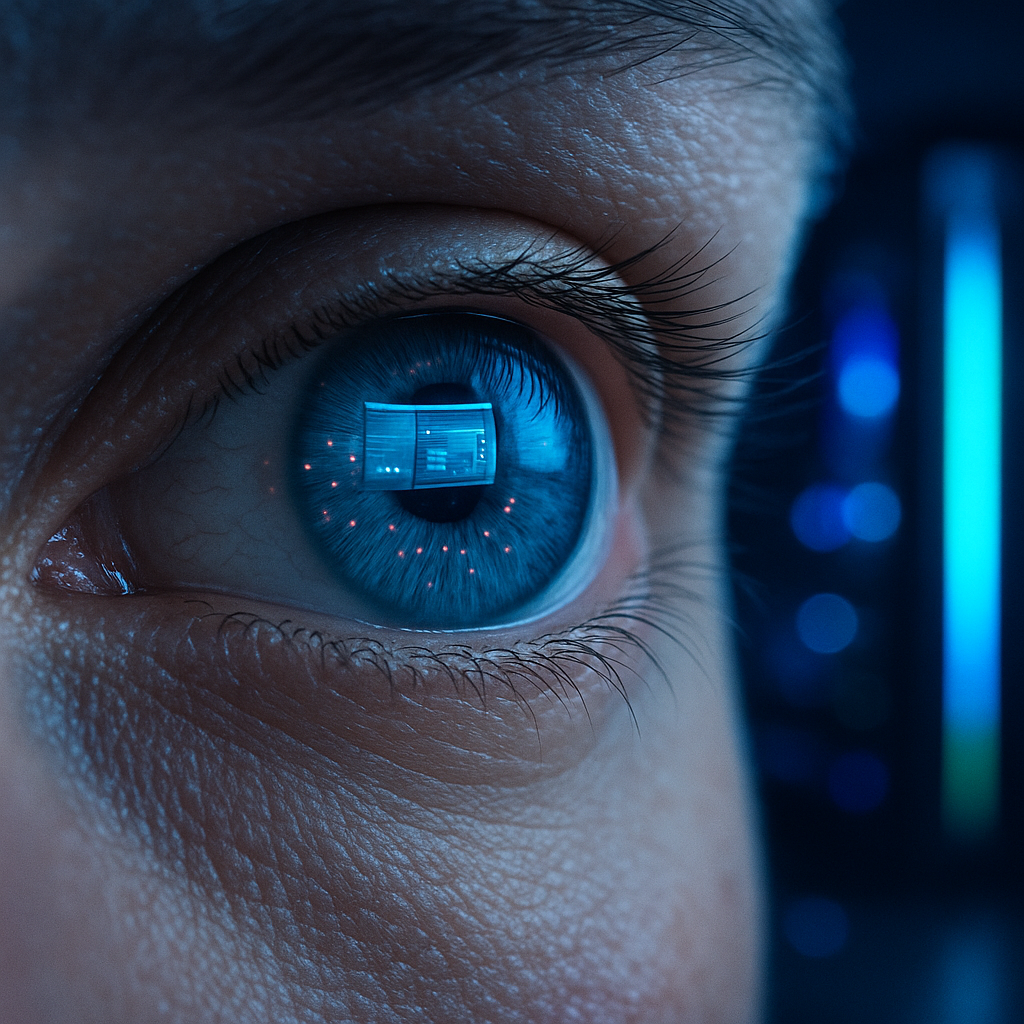
The Tobii Eye Tracker 4C, released in 2016, was their first major consumer gaming product, offering basic gaze tracking and head tracking features. It was well-received but limited — a capable proof of concept more than a polished experience. The Tobii Eye Tracker 4 iterated on this foundation, improving accuracy and expanding game compatibility.
The Tobii Eye Tracker 5, launched in 2020, represented a significant jump forward. It introduced proper 3D head tracking alongside eye tracking, allowing for more nuanced head movement detection and making the overall experience feel considerably more natural. The device also improved its working range, accommodating players who sit further from their screens — a meaningful quality-of-life improvement for those with large ultrawide monitors.
The Tobii Eye Tracker 6 continues this trajectory, with improvements in tracking robustness across different lighting conditions and expanded compatibility, including tighter integration with virtual reality headsets and next-generation foveated rendering pipelines.
Eye Tracking as an Accessibility Tool
Perhaps the most meaningful — and occasionally overlooked — dimension of eye tracking in gaming is its role in accessibility. For players with limited motor function, conditions like ALS, cerebral palsy, or spinal cord injuries, eye tracking can be the difference between being able to play games at all or being entirely excluded from the hobby.
Microsoft’s Xbox Adaptive Controller has drawn considerable attention to the broader conversation about inclusive gaming design, and eye tracking fits naturally into that conversation. Several titles have experimented with eye-tracking-only control schemes, and while these remain niche, they represent a genuinely important use case.
Beyond severe physical limitations, eye tracking also benefits players with repetitive strain injuries who wish to reduce reliance on mouse movement, or those who simply find certain control configurations uncomfortable. The technology, in this sense, quietly expands who gaming is for.
The 20/20/20 Rule and Gaming Eye Health
A common question that arises in discussions about gaming and eyes is the 20/20/20 rule. This is a guideline recommended by optometrists to reduce digital eye strain: every 20 minutes, look at something at least 20 feet away for at least 20 seconds. The rule is designed to give the eye’s focusing muscles a break from the sustained near-focus required when staring at a screen.
Interestingly, this connects to eye tracking in a couple of ways. First, intensive gaming sessions where eye tracking is active still require the same attentiveness to eye health as any other screen-based activity. The technology tracks your eyes; it doesn’t protect them from strain. Second, and more speculatively, some researchers have noted that eye tracking data could theoretically be used in future to monitor for signs of visual fatigue and prompt players to take breaks — though this remains more of a possibility than a current feature in consumer products.
Challenges and Limitations
Eye tracking in gaming is genuinely impressive, but it’s not without its friction points. Several practical challenges continue to affect the user experience:
- Calibration requirements: Most systems require an initial calibration process, and accuracy can drift if the player shifts position significantly. This is less of an issue with newer devices but remains a consideration.
- Glasses and contact lenses: Certain lens coatings and frame styles can interfere with infrared tracking, though modern devices have become considerably better at accommodating eyewear.
- Lighting conditions: Strong direct light, particularly sunlight hitting the face from an angle, can disrupt tracking quality.
- Game support: The technology is only as useful as the number of titles that have been developed to take advantage of it. While the library of compatible games has grown substantially, it still represents a fraction of the overall market.
- Price point: Consumer eye trackers remain a niche purchase, and while prices have come down meaningfully, the cost can be difficult to justify for players who primarily engage with games that don’t support the technology. If you’re weighing up where to invest your budget, it’s worth considering how different platforms compare for tech value before adding peripherals to the mix.
Integration with VR and the Future of Immersive Gaming
Virtual reality represents perhaps the most exciting frontier for eye tracking. Inside a VR headset, eye tracking enables foveated rendering at a level that can meaningfully extend what’s achievable with current hardware. The PlayStation VR2 launched with built-in eye tracking as a standard feature — a landmark moment that signals the technology is no longer optional in premium VR experiences.
In VR, the stakes are even higher. Rendering a full stereoscopic scene at high resolution is extraordinarily demanding, and foveated rendering — only rendering detail where the eye is actually looking — can reduce that load by a substantial margin. Some estimates suggest that dynamic foveated rendering can reduce rendering costs by 50% or more in certain scenarios, which is a transformative efficiency gain.
Beyond performance, eye contact within VR environments becomes meaningful when avatars can accurately reflect where their user is looking. Social VR applications, virtual meetings, and multiplayer gaming all benefit from the subtle but powerful communicative cues that real eye contact provides.
What Comes Next?
The trajectory points clearly towards deeper hardware integration. Rather than eye tracking being a separate peripheral, it seems increasingly likely that the technology will be embedded directly into monitors, headsets, and gaming laptops as a standard feature. As foveated rendering becomes more central to managing the demands of high-resolution displays and ray tracing, the business case for manufacturers to include eye tracking natively becomes more compelling.
Artificial intelligence is also beginning to intersect with gaze data in interesting ways — using eye movement patterns to adapt game difficulty, detect player engagement levels, or personalise narrative experiences based on what a player appears to be paying attention to. This sits within a much broader shift in how AI is reshaping game design, with gaze data representing just one of many new inputs developers are learning to harness.
Conclusion
Eye tracking’s journey in gaming — from early academic research tools to accessibility devices to consumer gaming peripherals to integrated VR hardware — reflects a broader pattern in how emerging technologies mature. What begins as a specialist curiosity gradually finds its niche applications, then its mainstream moments, and eventually its permanent place in the infrastructure of the medium.
The technology genuinely improves immersion when implemented well, offers meaningful benefits for accessibility, and underpins some of the most significant performance optimisations available to game developers today. Its limitations are real but diminishing with each hardware generation. As more titles adopt support and more devices include the feature natively, the question of whether eye tracking belongs in gaming has been largely answered — the more interesting question now is how deeply it will reshape the experience of playing.

